
Suji is a very common Indian ingredient used in every kitchen to prepare different types of snacks, morning meals, and even desserts. As it is widely used by many people, Satyendra Sattoo ensures to offer the best quality suji suitable for daily cooking. However, you might observe lump formation in suji while cooking, affecting its consistency and texture. Therefore, the following blog sheds light on common reasons behind suji lump formation during cooking.
While cooking suji, you might observe lump formation. One of the main reasons behind such lumps is the addition of hot water too quickly. The same thing will happen even when adding hot milk. Second, other reasons that affect the consistency of suji are uneven heat, incorrect water-suji ratio, and insufficient stirring.
So, if you are looking for the best quality in the market, then prefer Satyendra Sattoo suji. This is because we manufacture our product from premium wheat with better granulation. Such attention to detail allows you to prepare the best dishes using suji. To ensure proper quality, the steps we follow are hygienically processed, drying products instead of over-roasting, and airtight packaging. These steps bring consistency to your cooking while you prepare suji.
You can also compare our suji packet price to find the most affordable option for yourself. Furthermore, you can also explore the product quality and processing standards for better assurance. The best way by which lumps will not be developed are adding the suji slowly and stir continuously for a smooth texture.
Water temperature plays a very essential role during suji cooking, as it helps you identify how much hydration is needed. If you add hot water, the outer surface of suji hydrates too quickly, while the inner part of the granules remains dry. This makes the absorption process uneven, resulting in an uneven and dense texture.
Furthermore, the addition of lukewarm water leads to slow hydration of suji during cooking. This allows the granules to absorb the right amount of water slowly and uniformly. So, if you want to cook delicious dishes, then choose to purchase from Satyendra Sattoo. This is because the suji is extracted from premium-quality wheat with uniform granulation for a smooth texture. The hygienic processing and packaging enhance cooking consistency.
You can also consider comparing suji packet price to find the best option for your cooking. However, selecting the best quality product is not the last step; you need to ensure that the liquid is heated properly and keep the cooking temperature under control for a smooth texture.
Heat is the main part where it determine what will be the final texture of suji during cooking. When the heat is moderate and controlled, it ensures that the granules have enough time to absorb the right amount of moisture and get soft slowly. On the other hand, avoid excessive heat, as it might accelerate the surface hydration, but it will stay dry on the inside, resulting in uneven thickness and lumpiness. Thus, it will form a pasty or coarse consistency in suji.
To prepare suji with a smooth texture, keep the flame steady. Low heat and adding lukewarm water are most important to prepare meals like upma and halwa. Such steps allow the suji to absorb the right amount of heat and swell gradually. Thus, maintain right texture without becoming too sticky.
We at Satyendra Sattoo have a better understanding of such things, so we offer products that are dried and avoid providing over-roasted ones. We also ensure that the suji is hygienically processed and packed to emphasise quality consistency. Therefore, processing and quality are not the last thing to consider; you can also compare our suji packet price to ensure affordability for daily cooking.
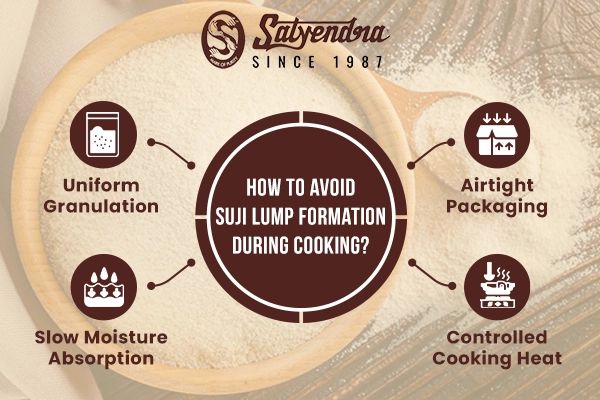
To sum up, lumps in suji are often formed due to uneven heating and hydration. So, to avoid this, you need to add lukewarm water and keep stirring to prevent lumpiness and maintain consistency.


